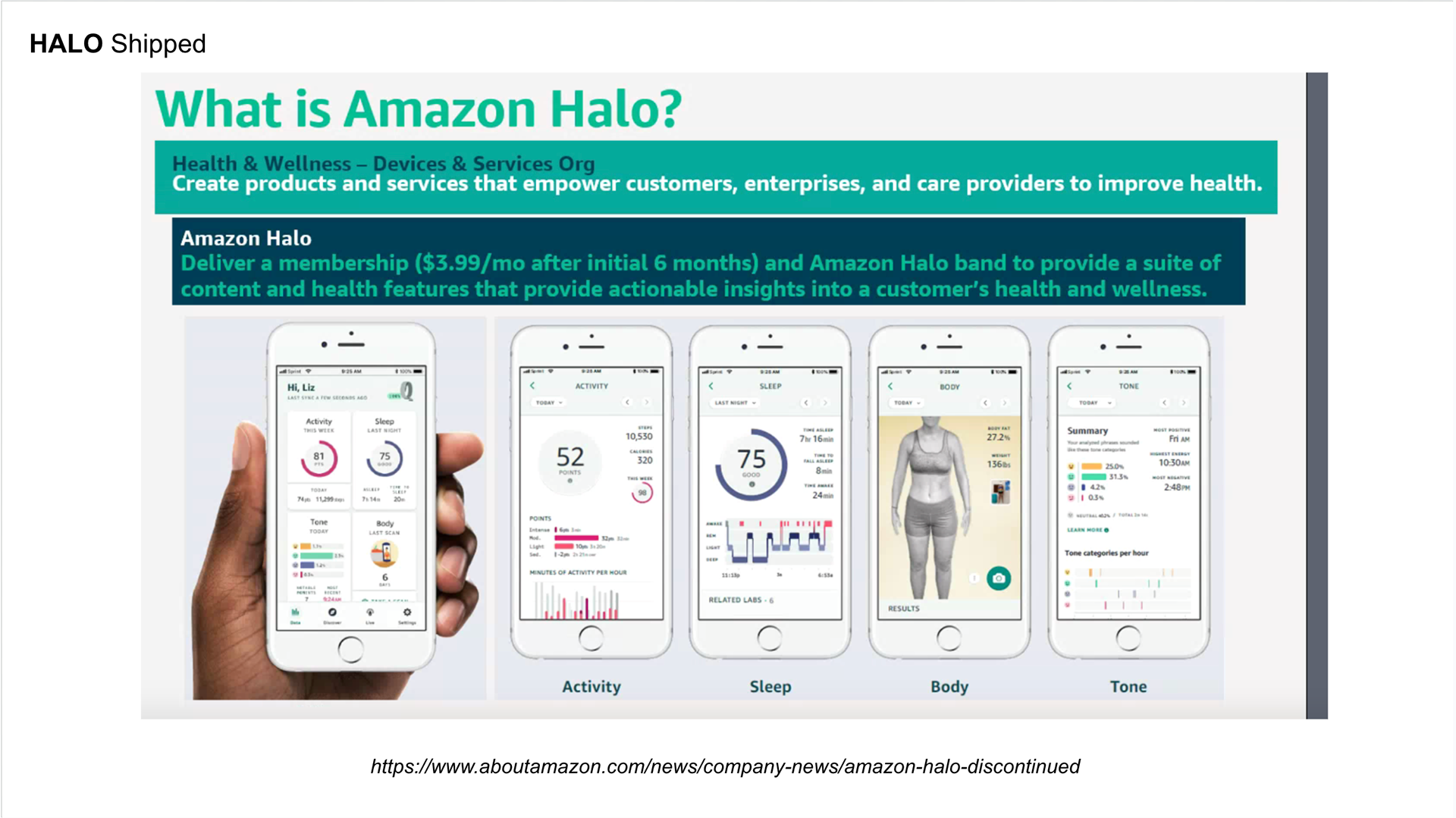
Redefining Personal Health through Ambient & Spatial Computing
In a market saturated with "loud" fitness trackers that demand constant attention,
I led the R&D and strategic vision for Project Kilo.
Our goal was to move personal health technology off the wrist and into the room,
creating an ambient environment where technology acts as a supportive,
invisible partner in the user's physical journey.
I led the R&D and strategic vision for Project Kilo.
Our goal was to move personal health technology off the wrist and into the room,
creating an ambient environment where technology acts as a supportive,
invisible partner in the user's physical journey.
The Challenge
Traditional fitness metrics are often rooted in "weight"—a singular, often discouraging number that fails to capture the complexity of human physiology.
Traditional fitness metrics are often rooted in "weight"—a singular, often discouraging number that fails to capture the complexity of human physiology.
“While body weight is the most commonly used way to measure fitness, this measurement ignores the more meaningful metric: body composition.”
— Project Kilo PR/FAQ
— Project Kilo PR/FAQ
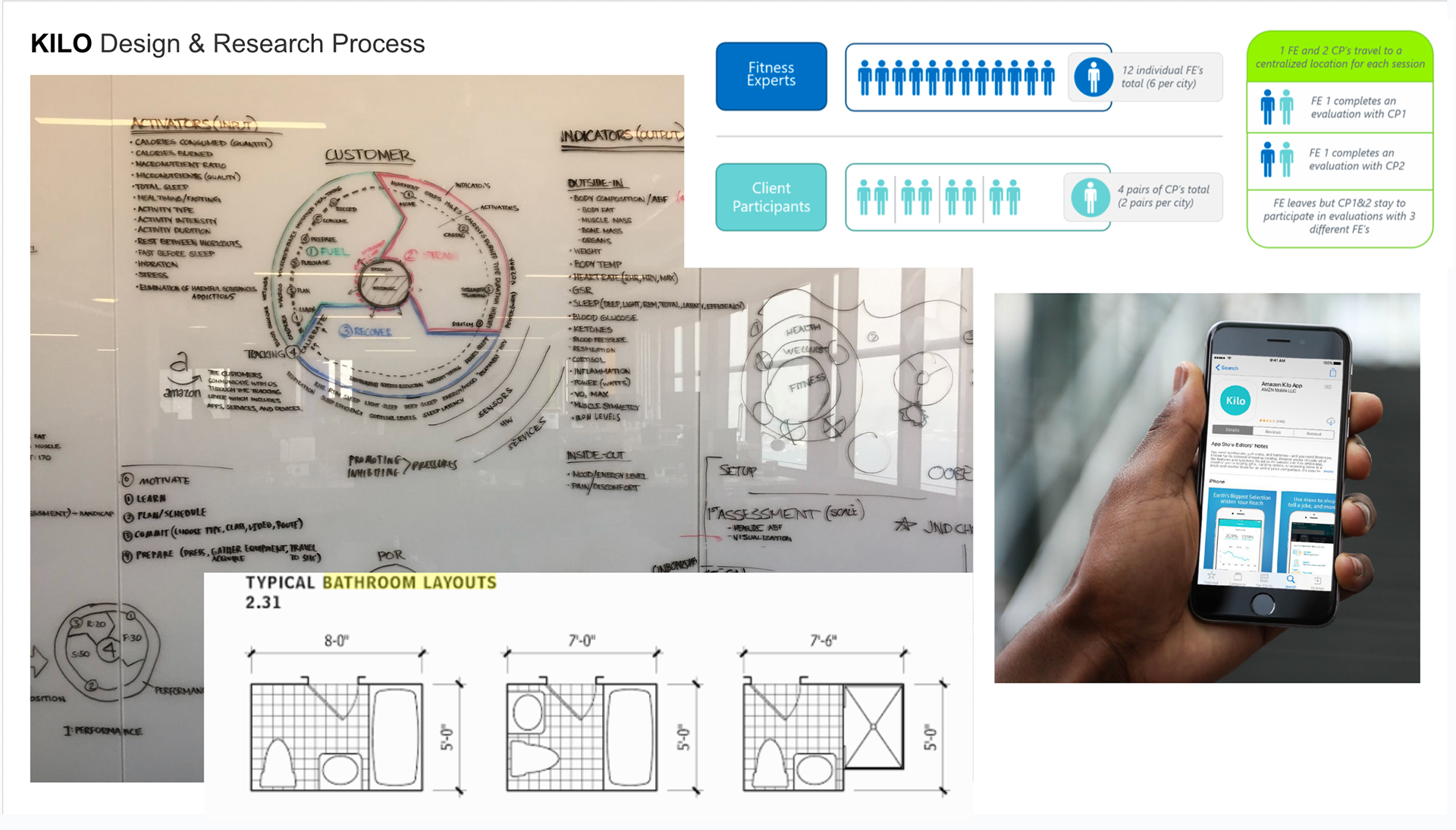
The Innovation
I directed a multidisciplinary team to build a proof-of-concept that integrated three emerging technology pillars into a single, cohesive customer experience:
I directed a multidisciplinary team to build a proof-of-concept that integrated three emerging technology pillars into a single, cohesive customer experience:
Spatial Awareness Computer Vision
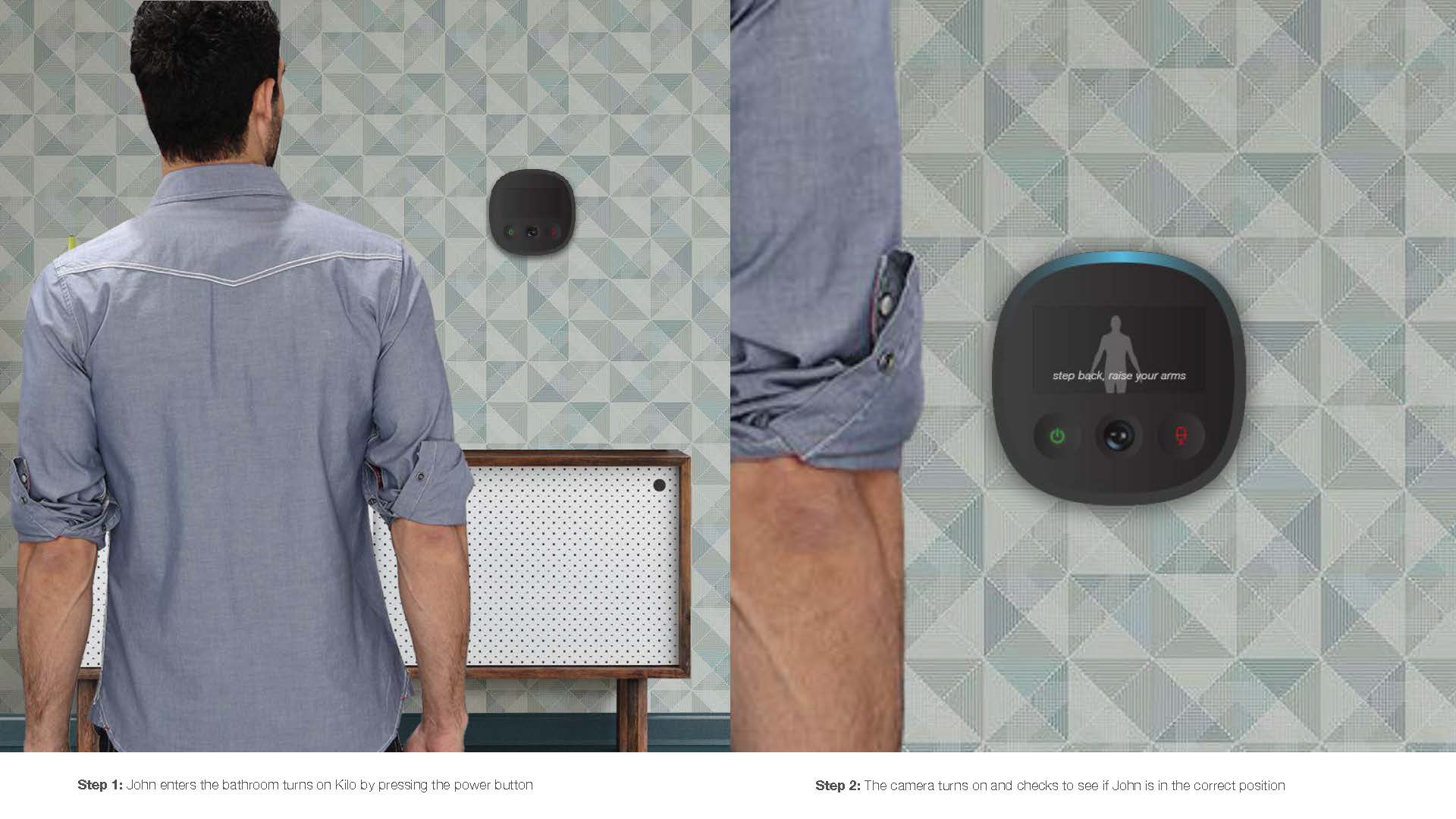
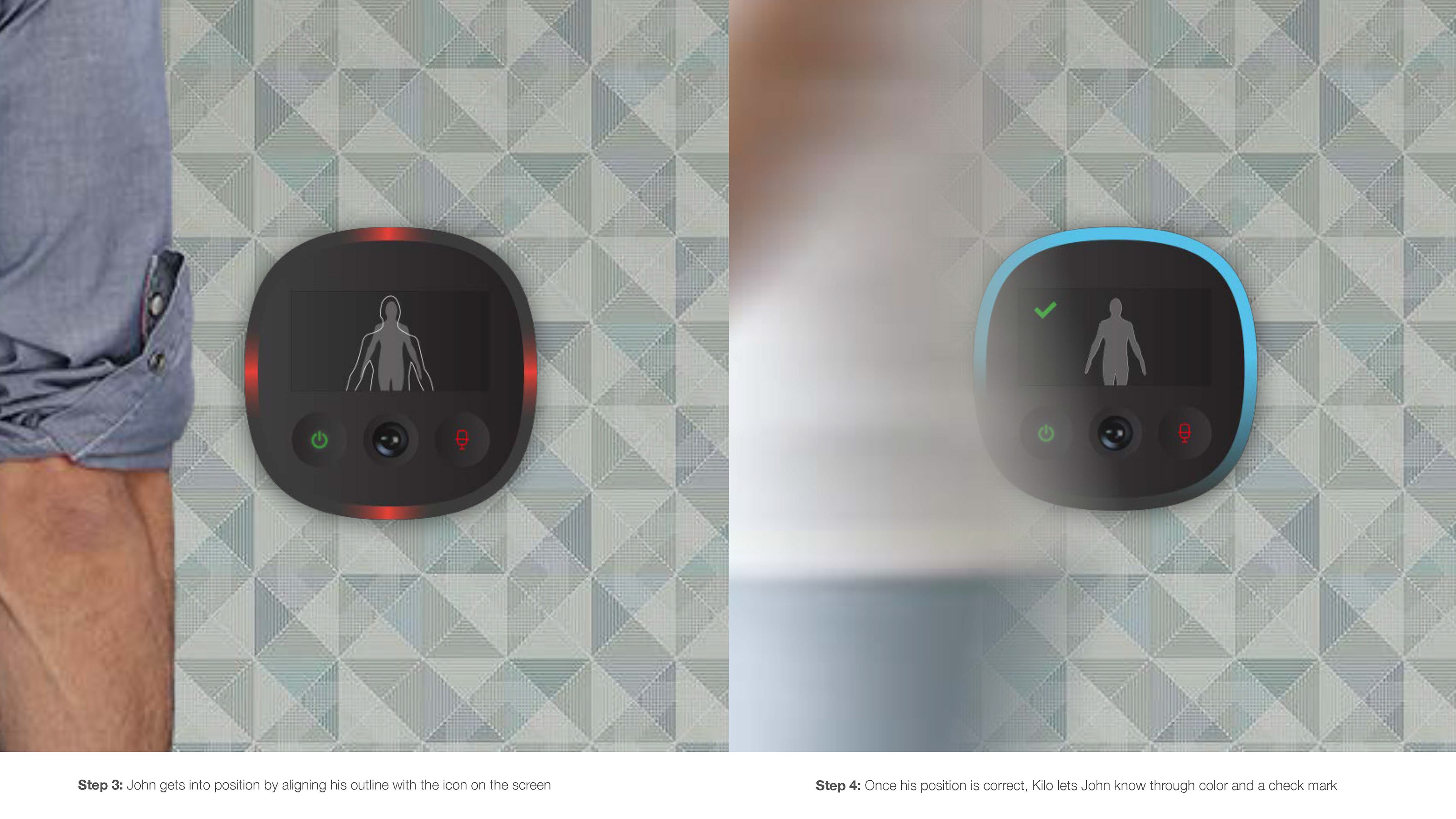
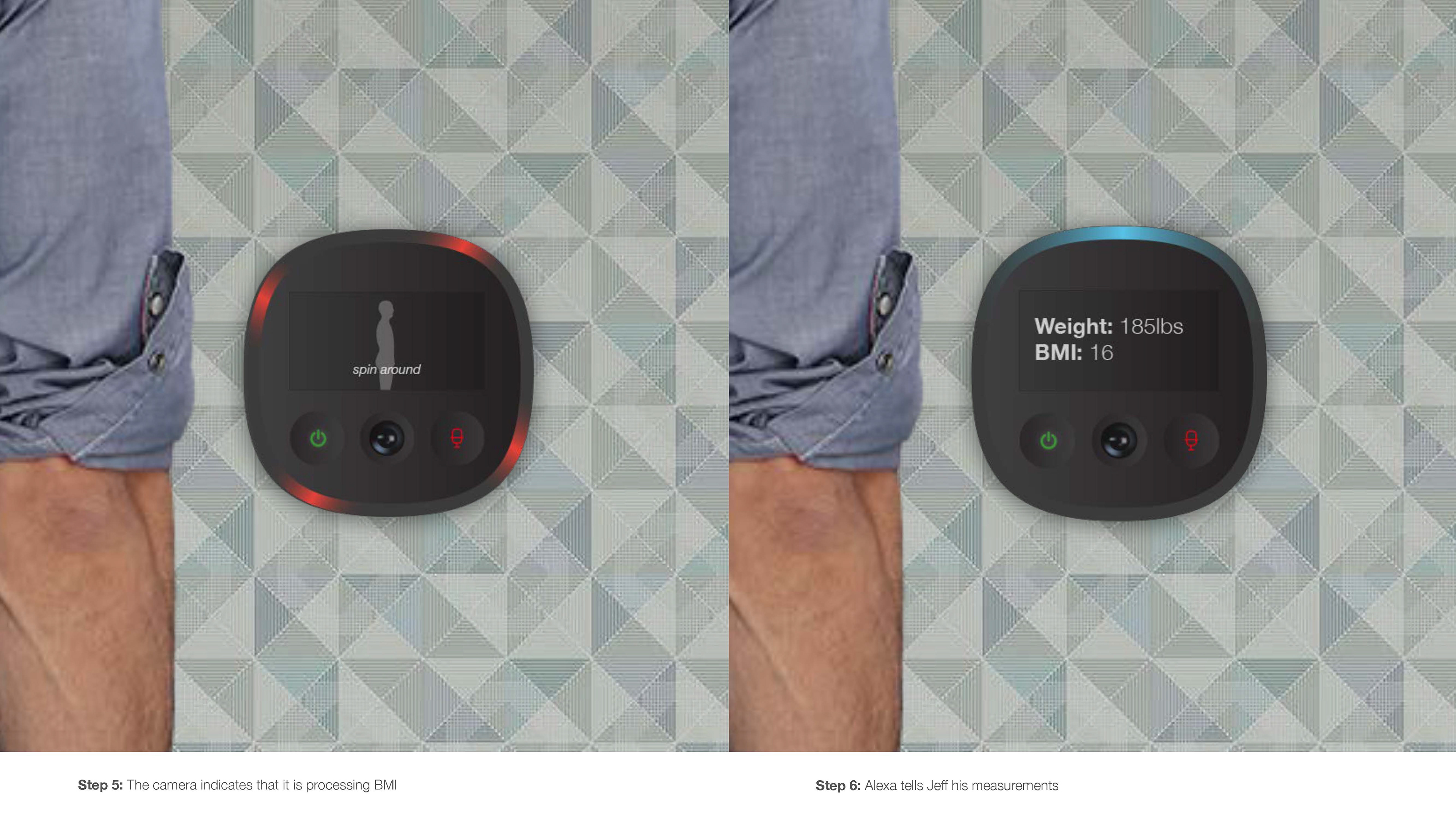
Leveraging a 3D camera system to accurately and instantly measure body fat percentage. This shifted the interaction from manual input to a spatial scan, providing users with a "mirror" that understood their progress better than they did.
Leveraging a 3D camera system to accurately and instantly measure body fat percentage. This shifted the interaction from manual input to a spatial scan, providing users with a "mirror" that understood their progress better than they did.
Ambient Intelligence AI Personal Trainer
By pairing the device with Alexa’s NLU (Natural Language Understanding), we created an AI personal trainer that provided "at-a-glance" information and voice-guided tips.
By pairing the device with Alexa’s NLU (Natural Language Understanding), we created an AI personal trainer that provided "at-a-glance" information and voice-guided tips.
Visual Storytelling Time-Lapse & Firefly
We utilized Firefly image recognition to automate food tracking and created time-lapse visual narratives of body change.
We utilized Firefly image recognition to automate food tracking and created time-lapse visual narratives of body change.
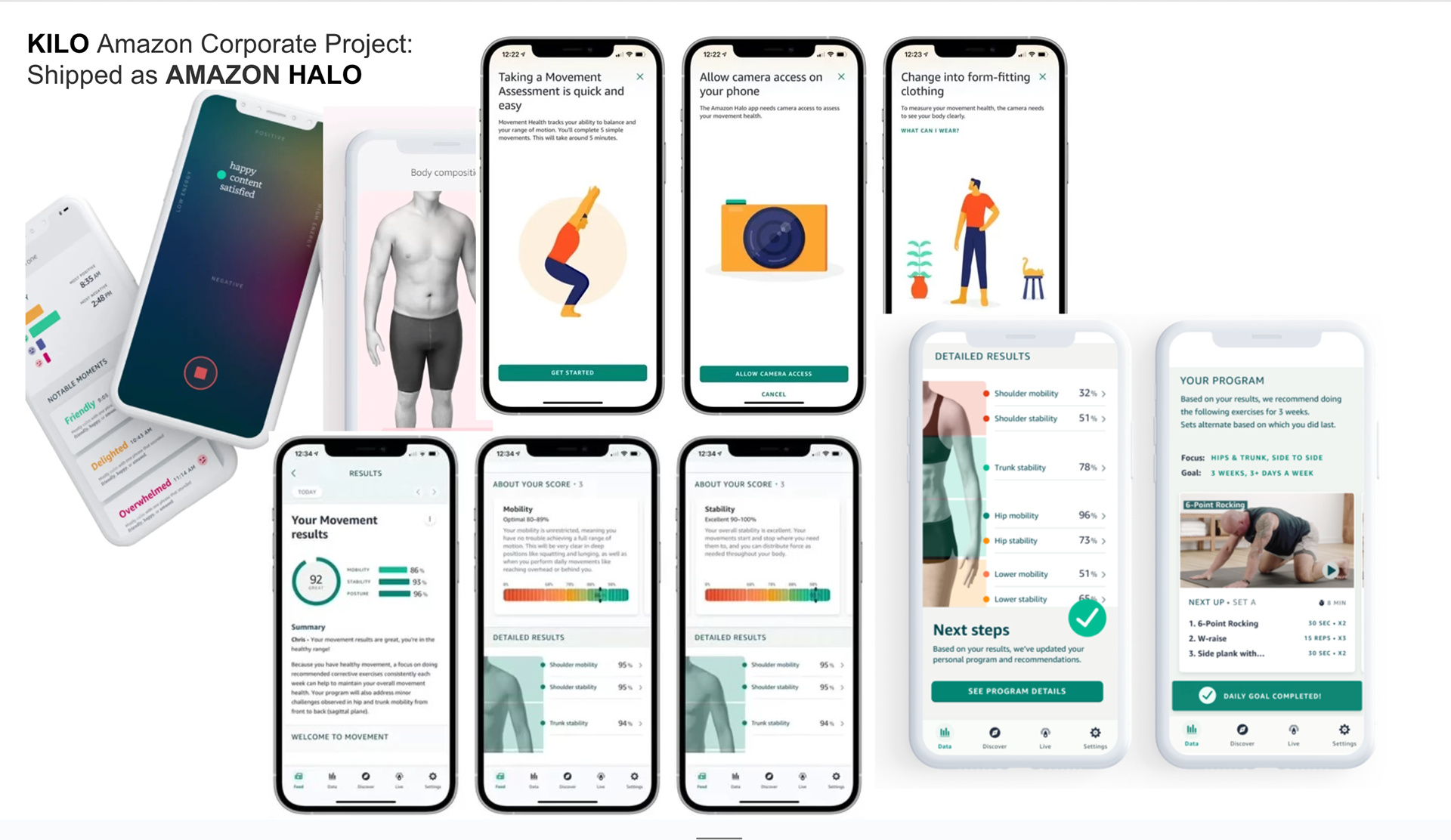
Insights on the Human Experience
1. Removing Cognitive Friction We identified that the primary barrier to long-term health change isn't a lack of data; it’s the friction of logging it.
“Alexa/NLU can be leveraged to create a quick and frictionless logging experience... allowing users to track their food intake and nutrition more easily than ever.”
— Project Kilo UX Research
— Project Kilo UX Research
2. Building Emotional Resonance through "The Visual Mirror" By moving away from spreadsheets and toward time-lapse photography, we grounded the data in visual reality. This wasn't about "tracking numbers"; it was about "validating effort."
“Kilo is for customers who want guidance and the validation that their health inputs... result in quantifiable and empirical body change.”
— Project Kilo Customer Persona
— Project Kilo Customer Persona
3. Navigating the Social Fabric My research emphasized that physiological change does not happen in a vacuum. We designed the UX to account for the "Central Relationships" that either support or undermine progress.
“Consumers pursuing a substantive change in their physiology will benefit from a range of social interactions involving cooperation, constructive influence, and support.”
— Secondary Social Research for KILO
— Secondary Social Research for KILO